
As of August 2025
The authentication shortcuts that feel fine in a scraping script - shared credentials, persistent sessions, long-lived tokens - turn into examination findings the moment the agent is initiating wires and touching regulatory reporting.
Payment systems hold a higher bar, and most AI tutorials are written for the lower one. Drop consumer-grade auth into a payments environment and the first thing a bank examiner flags is exactly the part that demoed well.
The pattern I keep seeing: teams build an agent against consumer-grade auth, then try to move it into a payments environment and wonder why it will never pass an exam. The fix is not exotic. It is the same identity and access discipline banks already apply to any system that moves money, applied to the agent.
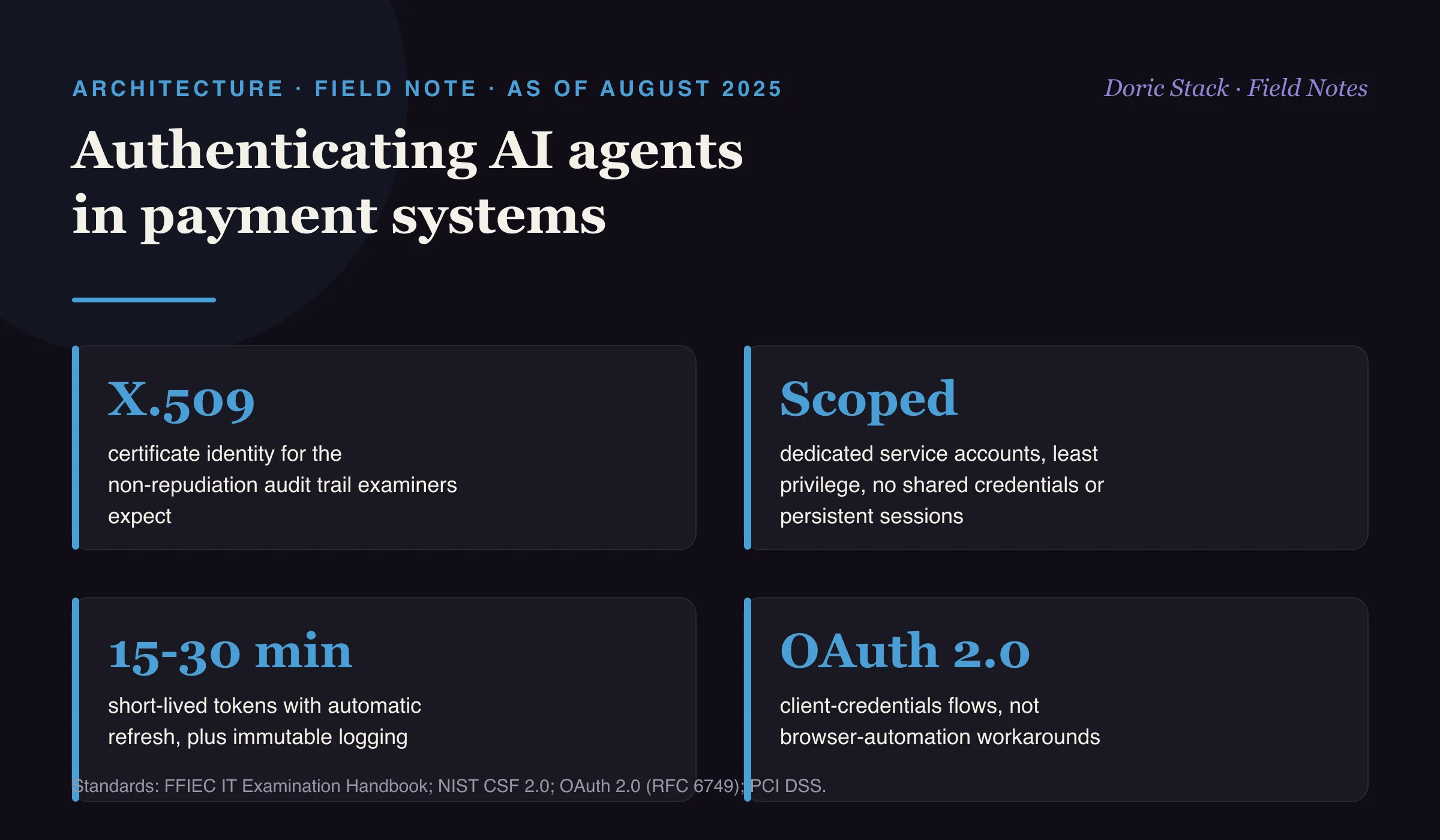
Identity
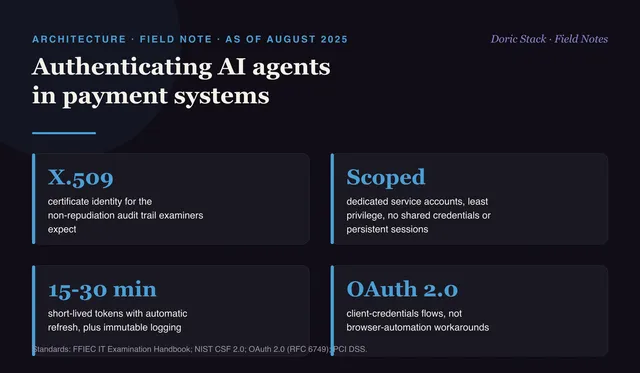
X.509
certificate identity gives the non-repudiation audit trail examiners expect: when an agent moves $50K, the chain proves which system acted and when.
Access
Scoped
dedicated service accounts with least privilege. No shared credentials, no persistent sessions.
Tokens
15-30 min
short-lived tokens with automatic refresh, plus immutable logging, to limit exposure if a credential leaks.
The consumer pattern
Browser automation, a shared API key, a session that stays open. It demos well, and it is the first thing an examiner flags.
The enterprise pattern
Certificate-based identity for traceability. OAuth 2.0 client-credentials flows instead of automation workarounds. Service accounts scoped to the minimum the agent needs. Tokens that expire in minutes, with every action landing in an immutable log. The result is a system a regulator can audit - which, from a treasury background, regulators prefer over an opaque manual process.