Client entry
Codex, Claude Code, Gemini CLI, or another MCP client talks to one local broker facade.


Open-source tool
MCP Broker: Unified Context Infrastructure
Product identity
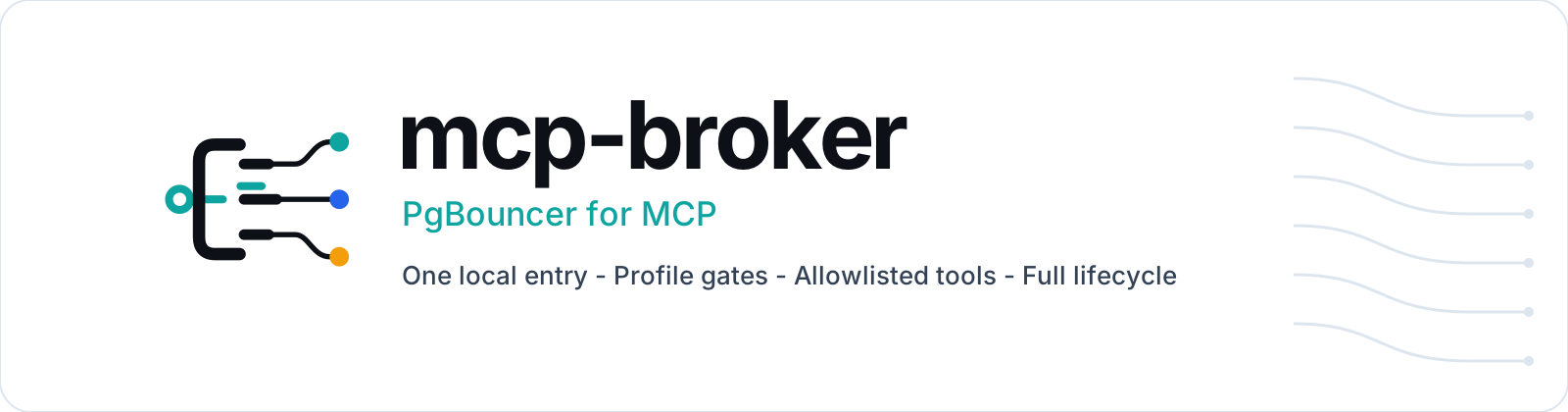
one ingress. many servers. safe by profile.
Routing proof
MCP Broker makes the product promise concrete: one local entry point, a profile-gated tool view, and only the allowlisted tools the active client should see.
Codex, Claude Code, Gemini CLI, or another MCP client talks to one local broker facade.
The active profile decides which upstreams and mutating tools are visible.
Search, describe, call, and status stay compact instead of flooding every session.
Before broker
Every client repeats server lists, context expands, and upstream lifecycle becomes each tool's problem.
After broker
One broker owns profile exposure, namespace routing, upstream startup, and safe invocation.
Product brief
Curated from the product README. GitHub owns install commands, release details, and the full operator docs.
01
MCP clients tend to repeat server lists, start duplicate upstream processes, spread OAuth and browser state across tools, and spend context on raw tool definitions before the task needs them.
02
MCP Broker runs a local daemon behind a stdio client shim. It owns profile exposure, namespace routing, upstream startup, reuse, cleanup, status, and safe tool calls.
03
Use it when Codex, Claude Code, Gemini CLI, or another MCP client has more tools than you want loaded into every session.
A process broker for Model Context Protocol clients. Consolidate local agent infrastructure, optimize context windows, and manage tool access across AI sessions through a single endpoint.
GitHub remains the source for code, releases, issues, and operator documentation. This page explains where the project fits in the Doric Stack portfolio.